High blood pressure is the biggest single preventable cause of stroke and heart attack in the UK, and about a third of adults who have it don't know. That's the whole problem — it has almost no symptoms until it does something dramatic. A blood pressure check at your pharmacy takes ten minutes, costs nothing under the NHS Community Pharmacy Blood Pressure Check Service, and is quietly one of the most useful things any adult can have done regularly. Here's how it works at Brookfield Pharmacy in Hucclecote, what the numbers mean, and when to actually be worried.
Why blood pressure matters so much
Blood pressure is the force your blood exerts on the walls of your arteries. Too high, for too long, and it damages the arteries themselves — thickening them, stiffening them, and eventually causing:
- stroke — the artery in the brain either bursts or gets blocked
- heart attack — the coronary arteries narrow or clot
- heart failure — the heart wears out pumping against the resistance
- kidney disease — the tiny blood vessels in the kidneys are especially vulnerable
- vascular dementia — small strokes accumulate over decades
- eye damage — vessels in the retina are damaged
The unusual thing about hypertension is that none of that damage announces itself. People genuinely feel fine right up to the day something goes wrong. That's why screening matters more than symptoms.
What the numbers actually mean
A blood pressure reading gives you two numbers — for example, 128/82 mmHg.
- The top number (systolic) — pressure when the heart is pumping.
- The bottom number (diastolic) — pressure when the heart is resting between beats.
The UK guideline categories:
| Reading | Category | What we do |
|---|---|---|
| Below 90/60 | Low | Check symptoms; usually no action |
| 90/60 – 120/80 | Normal | No action; recheck in 5 years (sooner if risk factors) |
| 120/80 – 139/89 | High-normal | Lifestyle advice; recheck yearly |
| 140/90 – 159/99 | Stage 1 hypertension | GP review, likely home monitoring |
| 160/100 – 179/109 | Stage 2 hypertension | GP review, likely treatment |
| 180/120 or above | Very high | Urgent GP or A&E |
The exact cut-offs shift slightly by age, whether you're diabetic, and whether the reading was taken at home or in clinic. A single number in isolation doesn't tell you everything — patterns over time matter more than one reading on one bad morning.
The NHS blood pressure check at Brookfield Pharmacy
The NHS Community Pharmacy Blood Pressure Check Service is a free, walk-in check for anyone aged 40 and over who hasn't had a reading in the last six months. If you're under 40 with a family history of hypertension, stroke, heart disease before 60, or kidney disease, we can also see you.
What happens:
- You walk in — no appointment needed for the initial reading.
- Brief chat — a couple of questions about family history, lifestyle, existing conditions.
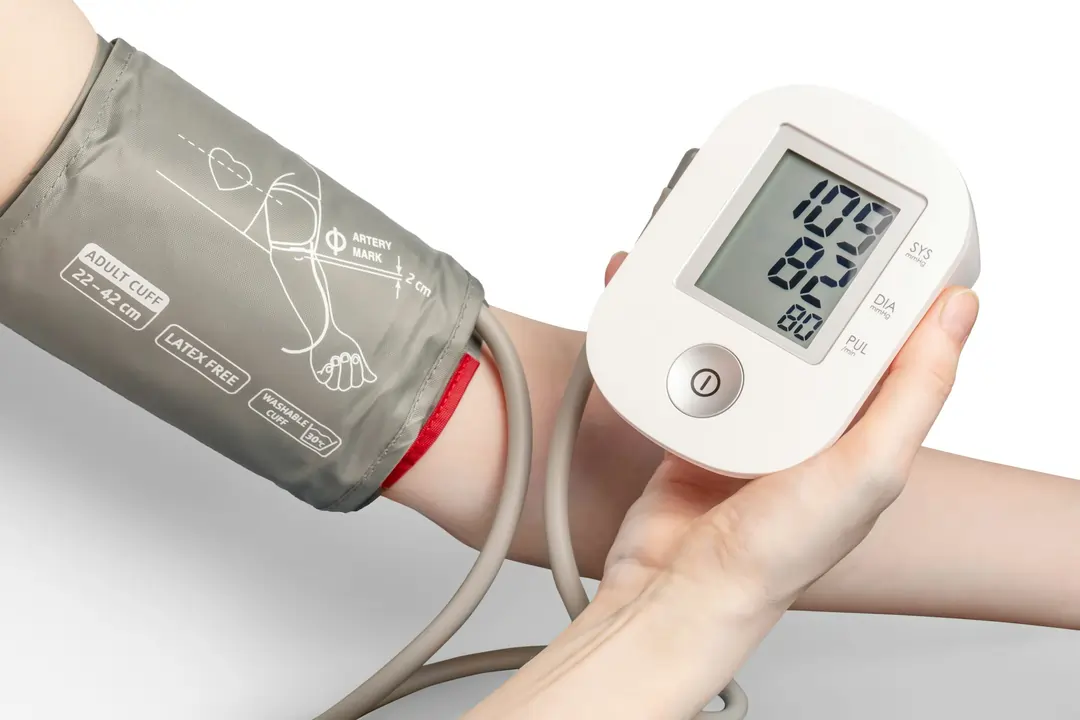
- The check itself — you sit down for a couple of minutes, cuff on the upper arm, we take at least two readings.
- Interpretation — we explain what the numbers mean.
- Next step, if needed — normal reading, we say so and suggest when to recheck; borderline reading, we may lend you an ambulatory blood pressure monitor for a 24-hour check (free); high reading, we send the result to your GP the same day and they'll be in touch.
Whole thing takes 10–15 minutes. It's genuinely free — no upsell, no catch.
Why pharmacy checks work better than doing it once a year at the GP
Two reasons.
Convenience. You're in the pharmacy already for a repeat, a shopping trip, a walk past. Adding ten minutes for a BP check is trivial. Booking a GP appointment for something that has no symptoms rarely happens until it's too late.
"White coat" effect and its opposite. Blood pressure genuinely rises when people are anxious — in a clinic, in front of the doctor, running late to the appointment. That inflates GP readings by 10–20 mmHg for some people. A relaxed check in a pharmacy consultation room, without a wait, without paperwork, gives a more honest number.
Where the pharmacy check is inconclusive, we can loan out a 24-hour ambulatory monitor — a small cuff that takes readings every 30 minutes during the day and every hour at night, so we see the pattern of your actual life, not one snapshot.
When to be concerned enough to act now
Two situations where you shouldn't wait to get a reading:
Very high readings above 180/120 — even if you feel fine. That's a hypertensive emergency territory. Go to the pharmacy, GP, or A&E depending on symptoms.
Any of these symptoms with a high reading:
- severe headache, especially at the back of the head
- chest pain
- shortness of breath
- vision changes
- confusion
- weakness or numbness on one side
- difficulty speaking
Some of those are stroke symptoms — if in doubt, 999.
What raises blood pressure (and what actually lowers it)
The evidence on lifestyle factors is well-established but often oversimplified. In descending order of impact:
Genuinely lower it:
- Weight loss — for anyone above their healthy weight, this is the single most powerful lever. Roughly 1 mmHg per kg lost.
- Salt reduction — cutting to under 6g/day (about a level teaspoon) drops systolic by 5–10 mmHg in salt-sensitive people.
- Exercise — 30 minutes brisk walking most days lowers systolic by 5–8 mmHg.
- Alcohol reduction — dropping from over 14 units to under 7 typically drops systolic by 5 mmHg.
- Smoking cessation — smoking itself only briefly spikes BP, but stopping dramatically reduces cardiovascular risk overall.
- Reducing chronic stress — meaningful but harder to quantify.
Sometimes overstated:
- Herbal supplements — most trials show modest or no benefit.
- Coffee — occasional spikes, no clear long-term effect for most people.
- Very low-carb or specific "diets" — beyond the general "less processed food" principle, no diet has a clear edge over another for BP.
If lifestyle changes get your BP into the target range and keep it there, medication may not be needed. If they don't, medication is safe, effective, cheap, and adds years to life — not something to resist out of principle.
If you're already on BP medicine
Once you're on treatment, regular home monitoring is more useful than yearly GP checks. We stock validated home blood pressure monitors from about £25, and we'll show you how to use one properly — many patients get readings 5–10 mmHg different from ours because they're doing it wrong (talking, sitting badly, taking it after a coffee).
Bring your monitor in any time — we'll validate it against ours to make sure it's reading accurately. We're also happy to review your medicines in a full medication review if you feel your BP treatment could be optimised.
Frequently asked questions
Do I need an appointment for a blood pressure check at Brookfield Pharmacy?
No. Walk in during opening hours. For the follow-up 24-hour ambulatory monitor loan, we'll book a specific slot.
Is the pharmacy blood pressure check really free?
Yes — for adults aged 40 and over, it's fully NHS-funded under the Community Pharmacy Blood Pressure Check Service. No hidden fee, no upsell.
How often should I have my blood pressure checked?
If it's normal and you have no risk factors: every 3–5 years up to 40, yearly from 40 onwards. If you're on treatment or borderline: at least every 3–6 months. If you're pregnant, following your midwife's guidance.
Can I check my own blood pressure at home?
Yes — home monitoring is often more accurate than clinic readings once you're used to it. Use a validated upper-arm monitor (not a wrist one). Sit quietly for 5 minutes first, feet flat, arm supported at heart height, no talking. Take two readings a minute apart, twice a day for a week.
What if my reading is high at the pharmacy?
We'll take it a second time, and often a third, to make sure. If it stays high we send the result to your GP the same day and — depending on the number — either the GP will contact you within a few days, or we'll advise going straight in.
Book a free blood pressure check at Brookfield Pharmacy
Walk in during opening hours or book a health check online. Brookfield Pharmacy is at 5 Brookfield Road, Hucclecote, Gloucester GL3 3HA, open Monday to Friday 8:30–18:00 and Saturday 9:00–12:00. Free parking, no appointment needed, and one of the most useful ten minutes you can spend for your long-term health.
About Ravneet Chahal
Ravneet Chahal is a highly qualified Pharmacist Prescriber at Brookfield Pharmacy with extensive professional credentials and expertise in clinical pharmacy practice.
Qualifications: MPharm, PGDip, PGCert IP, MCMA
With her specialized knowledge and prescribing authority, Ravneet is committed to providing evidence-based health information and personalized pharmaceutical care. She supports our patients in making informed decisions about their health and wellness.
Need Professional Advice?
Our experienced pharmacists at Brookfield Pharmacy are here to help. Get personalized advice for your health concerns.
Related Articles
Discover more insights from our expert team