If you've ever peered at a prescription label and wondered what "1 TDS PC" is supposed to mean, you are not alone. UK prescriptions are littered with Latin shorthand that made perfect sense to doctors in 1920 and makes very little sense to anyone else. Here's what it all means — and more importantly, the handful of things you should always check before walking out of the pharmacy.
What actually goes on a prescription
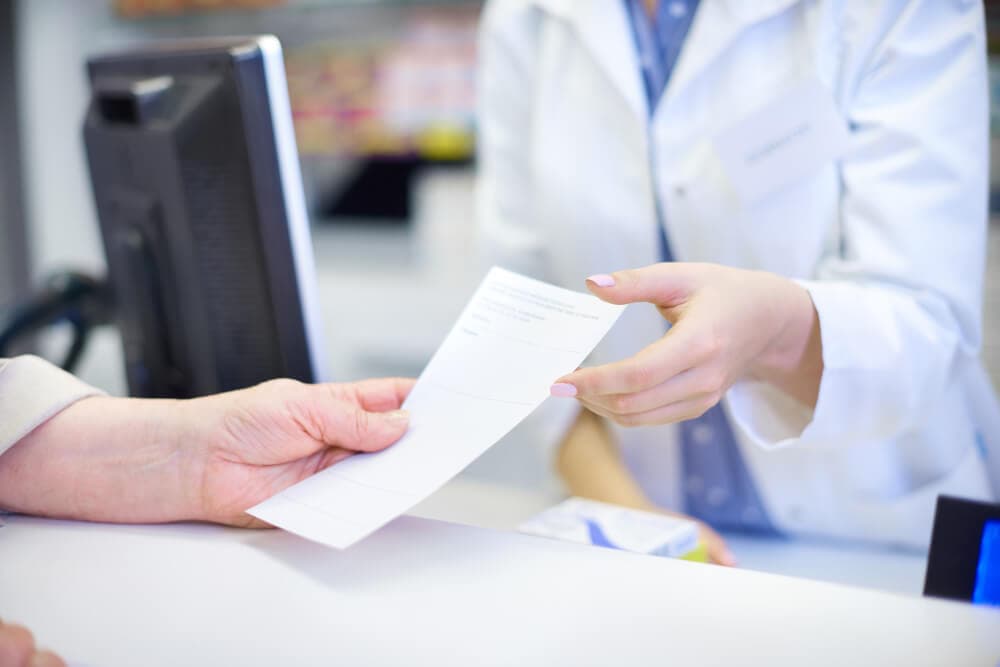
A standard NHS prescription (FP10) or electronic prescription shows:
- your name and date of birth — check both, every time
- your address and NHS number
- the prescriber's name, address and code
- the medicine — name, strength, form and quantity
- dosage instructions — this is where the Latin creeps in
- the prescriber's signature or EPS authentication
- the date — FP10s are valid for 6 months; controlled drug prescriptions only 28 days
Before you leave the dispensary, glance at your bag: is your name on every label? Is the medicine name and strength what your GP discussed? If anything looks off, ask us to check. Dispensing errors are rare but not zero.
The Latin shorthand, translated
How often to take it
| Abbreviation | Latin | In plain English |
|---|---|---|
| OD / QD | omni die / quaque die | Once a day |
| BD / BID | bis die | Twice a day |
| TDS / TID | ter die sumendum | Three times a day |
| QDS / QID | quater die sumendum | Four times a day |
| PRN | pro re nata | When required |
| STAT | statim | Immediately, single dose |
When to take it
| Abbreviation | Meaning |
|---|---|
| Mane | In the morning |
| Nocte | At night |
| AC | Before food |
| PC | After food |
| Prandial | With food |
| HS / ON | At bedtime |
How to take it
| Abbreviation | Meaning |
|---|---|
| PO | By mouth |
| SC | Subcutaneously (under the skin) |
| IM | Intramuscular (into muscle) |
| Top | Topically (onto skin) |
| SL | Sublingually (under the tongue) |
| PV / PR | Vaginally / rectally |
So "1 tab TDS PC" just means one tablet, three times a day, after food.
The bits people miss
Strength vs dose
The name on the box is not the dose. A box of "Amoxicillin 500mg capsules" doesn't tell you how many to take. The label on the box tells you that. We see people double-dose themselves fairly regularly because they read the strength as the dose.
"One to two" dosing
Lots of painkillers say "1 to 2 tablets four times a day" (paracetamol is the classic example). This means up to 2, not always 2. Start with 1 and see if that does the job — you'll get fewer side effects and it lasts longer before you run out.
PRN
"As required" doesn't mean "all the time". Codeine, tramadol and similar are deliberately prescribed PRN so you only take them when you genuinely need them. The longer you're on opioid painkillers, the harder they get to stop, so use the minimum that works.
"Complete the course"
Some medicines must be finished even if you feel better — antibiotics, steroid reduction courses. Others should be stopped once symptoms resolve — painkillers, anti-sickness tablets. If you're unsure which category yours falls into, ask.
What our pharmacy labels tell you
When we dispense a medicine at Brookfield Pharmacy, we add a white label to the box with:
- your name
- the medicine name, strength and form
- the dose and frequency (written out in English, not Latin)
- specific cautions — e.g. "take with food", "may cause drowsiness", "do not drink alcohol"
- the date, and our pharmacy address so you know where to come back to
Always read the whole label before you put the box away. If anything differs from what you remember your GP saying, ring us. Quicker to sort out before you start taking it.
Three questions worth asking every time
When you collect a new prescription, ask us:
- What does this medicine do? You'd be surprised how often nobody's explained it in plain language.
- What are the main side effects to watch for, and what do I do if I get them?
- Does it interact with anything I already take? Bring a list — including supplements, herbal stuff, and anything you buy over the counter.
Takes two minutes, saves a lot of grief.
Electronic Prescription Service (EPS)
If your GP sends prescriptions electronically to Brookfield Pharmacy, you'll never see the green paper FP10 — the prescription comes straight through to us. You still have all the same rights to ask questions and check what you've been given.
If you haven't nominated us yet, you can do it on the NHS App (search for Brookfield Pharmacy, ODS code FGQ38), at your GP surgery, or just tell us next time you're in.
Not sure about something? Ask.
Pharmacists are trained to understand every abbreviation, interaction and contraindication in the British National Formulary. Asking us doesn't waste our time — it's genuinely the main thing we're there for. Walk in during any opening hour at 5 Brookfield Road, Hucclecote, GL3 3HA, or ring 01452 618377.
And if English isn't your first language, or you'd like a family member on the phone during the conversation, that's completely fine — just say so and we'll make it work.
About Ravneet Chahal
Ravneet Chahal is a highly qualified Pharmacist Prescriber at Brookfield Pharmacy with extensive professional credentials and expertise in clinical pharmacy practice.
Qualifications: MPharm, PGDip, PGCert IP, MCMA
With her specialized knowledge and prescribing authority, Ravneet is committed to providing evidence-based health information and personalized pharmaceutical care. She supports our patients in making informed decisions about their health and wellness.
Need Professional Advice?
Our experienced pharmacists at Brookfield Pharmacy are here to help. Get personalized advice for your health concerns.
Related Articles
Discover more insights from our expert team