Travellers often ask us about the pre-exposure rabies vaccine, and they usually want to know two things: "Do I really need it?" and "Why is it so expensive?" Rabies is rare among UK travellers, but it is almost always fatal once symptoms start, and treatment after a bite can be hard to get in many countries. As pharmacist prescribers at Brookfield Pharmacy in Hucclecote, we've written this guide to explain who actually needs rabies pre-exposure prophylaxis, how the course works, and how it changes what happens if you're ever bitten.
What is rabies, and why does it matter for travellers?
Rabies is a viral infection of the brain and nervous system. It spreads through the saliva of an infected mammal, usually from a bite or scratch, or from a lick on broken skin. Dogs cause the vast majority of human cases worldwide. Monkeys, cats and bats can also carry the virus, and so can other mammals.
Rabies is found in more than 150 countries, including much of Asia, Africa, and Central and South America. It kills tens of thousands of people every year, and many of them are children. Once symptoms appear, there is no effective treatment.
The good news is that rabies is completely preventable if a wound is cleaned and treated promptly after an exposure. The pre-exposure vaccine makes that treatment much simpler, faster and easier to get hold of.
Who actually needs the rabies vaccine before travel?
Not every traveller needs the pre-exposure rabies vaccine. A fortnight in a resort hotel in a city carries a very different risk from three months backpacking through rural Asia. At your consultation, we look at where you're going, how long you'll be there, what you'll be doing and how far you'll be from medical care.
We're most likely to recommend the rabies vaccine if you:
- Will be far from medical care. If you'll be more than a day's travel from a hospital that stocks rabies vaccine and immunoglobulin, pre-exposure vaccination is strongly advised. This applies to treks, remote islands, overland trips and rural volunteering.
- Are staying a long time. On trips of a month or more, you're more likely to come across animals and less likely to stay on a predictable tourist route.
- Are travelling with children. Children are more likely to approach and stroke animals, and less likely to tell you about a small bite or lick. Their bites are also more often on the face and hands, which are higher-risk sites.
- Will be cycling, running or motorbiking. Dogs commonly chase cyclists and runners in many countries.
- Will be working with animals. This includes vets, wildlife volunteers, conservation work and animal sanctuaries.
- Will be caving or close to bats. Bats can carry rabies-like viruses almost everywhere, including in the UK.
- Are visiting temples or sites with monkeys. Monkey bites and scratches are a frequent reason travellers need treatment, especially in parts of Bali, Thailand, India and Nepal.
If none of these apply, for example a short city break or a resort-based beach holiday, the vaccine is often optional rather than essential. We'll give you an honest view either way.
How the rabies pre-exposure prophylaxis (PrEP) schedule works
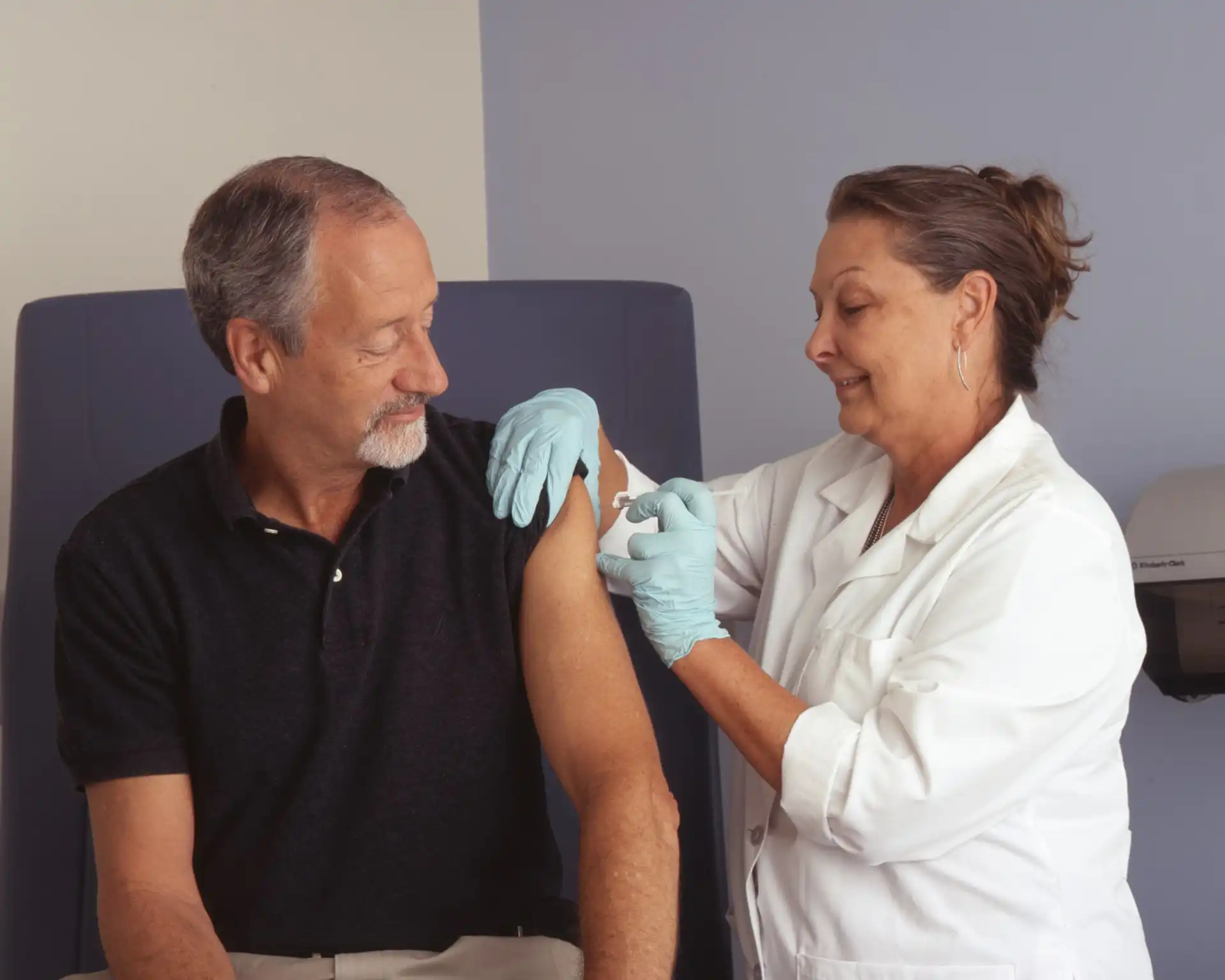
Rabies pre-exposure prophylaxis is a course of inactivated vaccine injected into the upper arm. The usual UK schedule is:
| Dose | Timing |
|---|---|
| Dose 1 | Day 0 |
| Dose 2 | Day 7 |
| Dose 3 | Day 21 or day 28 |
That means you ideally need to start at least three to four weeks before you travel. If you're short of time, talk to us. Depending on your circumstances, we may be able to use an accelerated schedule or plan how to complete the course.
Side effects are usually mild: a sore arm, some redness, a headache or feeling tired for a day or so. The vaccine can be given at the same appointment as other travel vaccines, such as hepatitis A, typhoid or Japanese encephalitis.
Most travellers don't need a routine booster after the primary course. If you're travelling again to a higher-risk area several years later, we'll check whether a single booster dose is worthwhile.
Why pre-exposure changes post-bite treatment
This is the most important part, and the main reason the vaccine is worth considering. Pre-exposure vaccination does not remove the need for treatment after a bite. What it does is make that treatment simpler, faster and much easier to get.
If you're not vaccinated and you're bitten or scratched, you'll usually need:
- Rabies immunoglobulin (RIG), an antibody injection given into and around the wound. RIG is expensive and in short supply worldwide, and it often isn't available outside major cities. Travellers sometimes have to fly to another country to get it.
- A full course of rabies vaccine, given over the following weeks.
If you've completed pre-exposure vaccination, you'll usually need:
- Just two booster doses of vaccine, a few days apart.
- No immunoglobulin, which removes the hardest part of finding treatment.
In practice, vaccinated travellers can often get treatment at a local clinic and carry on with their trip. Unvaccinated travellers may face an urgent and costly search for immunoglobulin.
What to do if you're bitten or scratched abroad
Whether or not you've had the vaccine, act straight away:
- Wash the wound thoroughly with soap and running water for around 15 minutes.
- Apply an antiseptic such as iodine or alcohol if you have one.
- Get medical help the same day. Tell the clinic which animal it was, where you were bitten and whether you've had a rabies vaccine. Keep your vaccination record with your passport.
- Don't wait to see if the animal becomes ill. Even an animal that looks healthy can transmit rabies.
- When you get home, contact your GP or NHS 111 with any treatment records, so your course can be completed if needed.
The best protection is avoiding contact in the first place. Don't stroke or feed dogs, cats or monkeys, however friendly they seem, and teach children to tell you about any bite, scratch or lick.
How much does the rabies vaccine cost?
Rabies pre-exposure vaccination for travel isn't free on the NHS, so it's a private vaccine wherever you get it. At Brookfield Pharmacy it costs:
| Vaccine | Price per dose | Full course |
|---|---|---|
| Rabies (pre-exposure) | £76 | £228 (3 doses over 21–28 days) |
That includes your consultation and risk assessment. For a full picture of what a typical trip might cost, including hepatitis A, typhoid and malaria tablets, see our travel vaccine cost guide.
It helps to compare that cost with the alternative. Post-bite treatment abroad without prior vaccination can mean emergency travel to find immunoglobulin, cutting your trip short and paying large medical bills.
Getting the rabies vaccine in Gloucester
You don't need a GP referral. Our pharmacist prescribers handle everything at Brookfield Pharmacy's travel clinic:
- Book a travel consultation online or by phone, ideally 6–8 weeks before you travel, so there's time for the full course.
- Consultation: we go through your itinerary, activities, health and medicines, and agree whether rabies vaccination is right for you.
- Vaccination: we give your first dose there and then if you'd like, and book your follow-up doses at times that suit you.
- Everything else: we'll cover any other vaccines or malaria tablets in the same appointment. For more pre-trip pitfalls, see 12 common travel health mistakes.
We're a short drive from Gloucester city centre, Brockworth and Churchdown, with parking nearby.
Frequently asked questions
Do I need a rabies vaccine for Thailand, Bali or India?
It depends on your trip rather than the country. Rabies is present in all three, and monkey and dog bites are common reasons travellers need treatment there. We usually recommend the vaccine for longer stays, rural or remote travel, children, cyclists and anyone working with animals. For a short resort or city holiday, it's often optional.
Is the rabies vaccine three doses or two?
The usual UK pre-exposure course is three doses, given on day 0, day 7 and day 21 or 28. In some circumstances a shorter schedule may be used. We'll advise on the best option for your timeframe at your consultation.
If I've had the rabies vaccine, do I still need treatment after a bite?
Yes. You'll still need to clean the wound and get medical help the same day. But you'll usually only need two booster doses and no immunoglobulin, which is much easier to get abroad.
Can I get the rabies vaccine on the NHS?
Not for travel. Pre-exposure rabies vaccination for holidays is a private service. The NHS does provide post-exposure treatment if you're bitten, either in the UK or after you return home.
How long does rabies vaccine protection last?
After a completed primary course, you're considered primed for life. That means you'll always need only the simpler two-dose treatment after a bite. Routine boosters aren't usually needed for travellers, but we may recommend one for repeat travel to higher-risk areas.
Book your rabies pre-exposure vaccination
Not sure whether you need the rabies vaccine for your trip? A short consultation will give you a clear, honest answer, and the course can start the same day. Book online here or call 01452 618377. Brookfield Pharmacy is at 5 Brookfield Road, Hucclecote, Gloucester GL3 3HA, open Monday to Friday 8:30–18:00 and Saturday 9:00–12:00.
About Ravneet Chahal
Ravneet Chahal is a highly qualified Pharmacist Prescriber at Brookfield Pharmacy with extensive professional credentials and expertise in clinical pharmacy practice.
Qualifications: MPharm, PGDip, PGCert IP, MCMA
With her specialized knowledge and prescribing authority, Ravneet is committed to providing evidence-based health information and personalized pharmaceutical care. She supports our patients in making informed decisions about their health and wellness.
Need Professional Advice?
Our experienced pharmacists at Brookfield Pharmacy are here to help. Get personalized advice for your health concerns.
Related Articles
Discover more insights from our expert team