Skin problems account for one in four GP visits in the UK, and a solid slice of those didn't need a GP at all — they needed a five-minute conversation with a pharmacist and something off a shelf. The other side of that coin: some skin problems shouldn't wait for a pharmacy consult and go straight to the GP or a dermatologist. Knowing which is which saves time, money, and occasionally lives. Here's the working framework we use at Brookfield Pharmacy in Hucclecote — what a skin health consultation can actually resolve, and what needs escalating.
The decision framework in one line
If it's mild, recognisable, and hasn't been changing suddenly — pharmacy first.
If it's spreading fast, systemic, painful, or you can't tell what it is — GP.
If a mole has changed, or a lesion won't heal — GP, priority.
Everything below is really just detail on those three rules.
What we can help with at the pharmacy
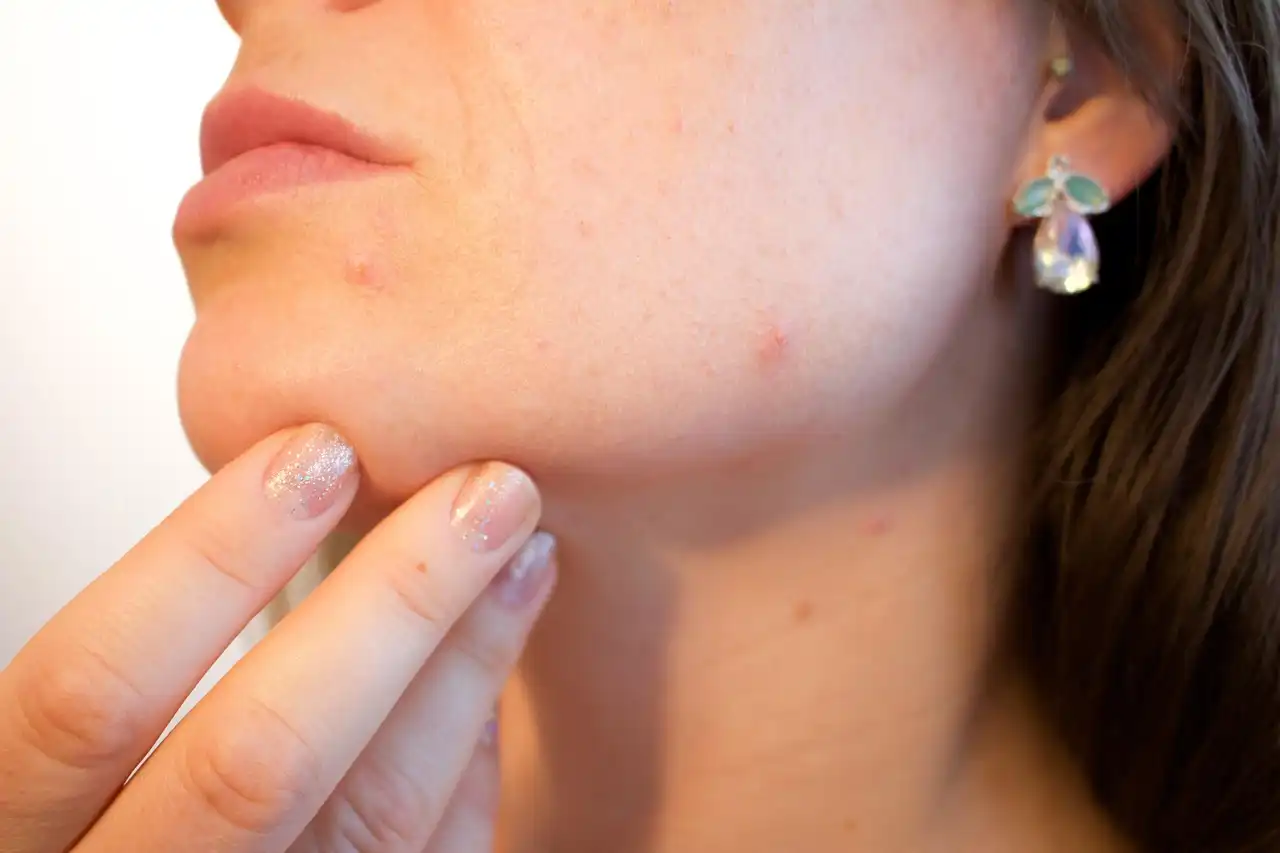
Mild to moderate acne
Over-the-counter benzoyl peroxide (2.5–5%), salicylic acid washes, and adapalene (now available on prescription without a GP visit via our Pharmacy First-adjacent skin service) sort out most mild inflammatory acne. We'll advise on routine, common irritants, and what timescale to expect improvement on (usually 6–12 weeks — slower than you'd want, faster than nothing).
Escalate to GP if: cystic, scarring, on the trunk, or hasn't budged after 3 months of OTC treatment.
Eczema (atopic dermatitis) flare-ups
Emollient choice matters more than most people realise — a good ointment (Epaderm, 50/50, Cetraben) beats a fancy cream for anything more than mild dryness. Mild topical steroids (hydrocortisone 1%) are OTC for short courses on non-facial skin. We'll explain how to use them safely (thin layer, twice a day, for a defined week or two rather than continuously).
Escalate to GP if: severe, on the face for adults, spreading, infected (weeping, crusted, yellow discharge), or a child with eczema not responding to treatment.
Fungal skin infections
Athlete's foot, jock itch, ringworm, and mild nail fungal infections — OTC antifungals (clotrimazole, terbinafine cream) sort most of them in 2–4 weeks. We'll show you where and how to apply, and cover the "why it keeps coming back" part (usually it never fully cleared or something's damp).
Escalate to GP if: nail fungus that needs oral treatment, extensive fungal infection, or diabetic patient with foot fungus.
Cold sores
We stock aciclovir cream OTC. Most effective within 24 hours of the tingling starting. We'll cover triggers and preventive strategies for frequent sufferers.
Escalate if: very frequent (6+ per year — GP may prescribe suppressive antivirals), around the eye (needs urgent GP or eye casualty), or in a baby.
Warts and verrucas
Salicylic acid preparations and cold-spray kits work for the patient prepared to persist for 8–12 weeks. Not glamorous, does the job.
Escalate if: facial warts, genital warts (needs sexual health service, not pharmacy shelf products), or immunosuppressed patient.
Minor cuts, scrapes, minor burns
Cleaning, dressings, when to keep dry vs when to keep moist, when to worry about tetanus. Straightforward.
Escalate if: deep cuts, dirty wounds, animal bites, human bites, burns bigger than 3cm or on face/hands/genitals, or any burn in a child.
Head lice, scabies
We stock the effective treatments and explain the application (which is what people usually get wrong). For scabies, everyone in the household is treated simultaneously, and all bedding washed hot the same day — miss that and it comes back.
Nappy rash, cradle cap, threadworms in kids
All quick pharmacy conversations with clear treatment paths.
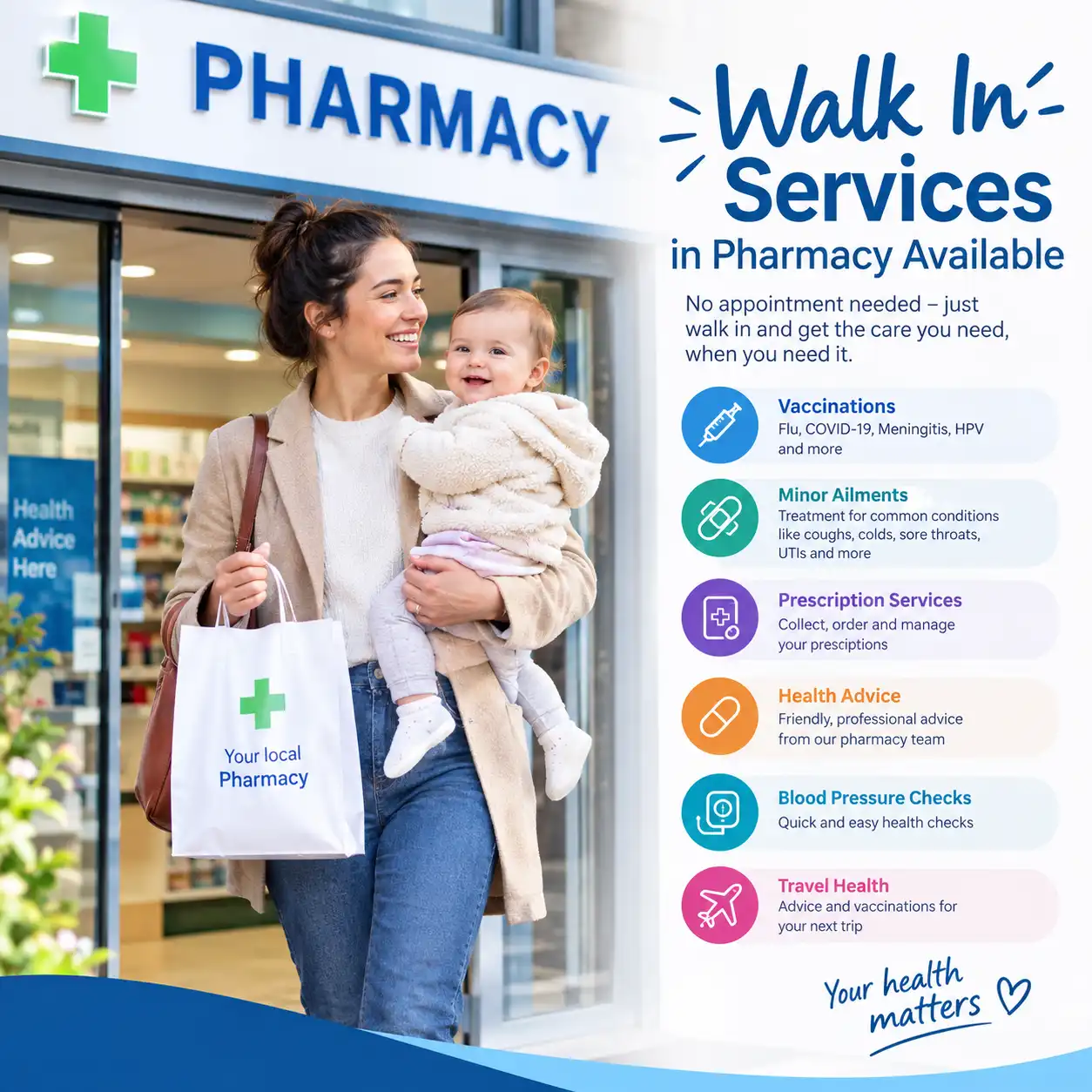
What Pharmacy First covers for skin (NHS-funded)
Under Pharmacy First, we can now assess and, where clinically appropriate, prescribe treatment for:
- Impetigo — the crusty, honey-coloured "school sore" — for age 1 and over
- Infected insect bites — for age 1 and over
- Shingles — for adults 18 and over, particularly time-critical (within 72 hours of the rash starting to make antivirals most effective)
Same day, no GP appointment, free consultation.
What needs the GP, not the pharmacy
Any changing mole
New size, new colour, irregular border, bleeding, itching, asymmetry — GP that week, not next month. Melanoma caught early is highly treatable; caught late it isn't. The GP referral pathway to dermatology for suspicious lesions is fast (2-week wait). If you're worried, don't wait to see if it changes further.
Rashes that spread rapidly
Especially with fever, joint pain, or feeling unwell — could be an infection or drug reaction that needs identifying and treating properly.
Purple or dark red spots that don't fade under pressure (a "non-blanching" rash)
Especially with fever, headache, or feeling very unwell — could be meningococcal septicaemia. Emergency: 999 or A&E.
Widespread new rash after starting a new medicine
Any drug-related rash spreading fast, or with mouth involvement, blistering, or peeling — potentially serious drug reaction. Stop the drug, contact GP or A&E.
Any sore, ulcer, or lesion that hasn't healed in 3 weeks
Especially on the face, ear, lip, or a mole. Skin cancers often present exactly like this — the "little scab that keeps forming and just won't go."
Chronic rashes needing diagnosis
If you've had something for months and don't know what it is — psoriasis, chronic urticaria, lupus rashes, contact dermatitis of uncertain cause — the pharmacy can only work with what we can see and identify. A GP referral to dermatology gets you the diagnosis and prescription-only treatments that follow.
Suspected shingles around the eye
Time-critical — needs urgent GP or eye casualty, not a pharmacy consultation.
Any skin problem in a very young baby that doesn't fit "nappy rash" or "milk spots"
Low threshold to escalate — babies deteriorate faster than adults.
What a skin health consultation at Brookfield Pharmacy actually involves
A typical skin health consultation in our private consultation room takes 10–15 minutes:
- You describe what's happening. When it started, what makes it better/worse, whether anything triggered it, family history if relevant.
- We look at the skin — bring the affected area exposed, or photos if it's somewhere private.
- Diagnosis — often obvious from a look, sometimes needs discussion.
- Treatment plan — OTC recommendation, or prescription where we can prescribe under Pharmacy First, or clear reasoning for GP referral if that's the answer.
- What to expect and when to come back — timescales for improvement and clear "warning signs" for escalation.
If we can help, you leave with a plan and often a treatment. If we can't, you leave with a clear reason to see the GP — and often a letter or communication we've sent ahead to speed things up.
The general skincare stuff — where a pharmacist beats the internet
Beyond specific conditions, a pharmacist is a decent source of sanity on:
- Sunscreen — SPF 30+ broad-spectrum, applied properly, reapplied every 2 hours in the sun, on ears and hands and neck, not just face. Most people use a quarter of what they should.
- Moisturisers — cheap ointments outperform expensive creams for most dry-skin problems. We'll show you what to buy that isn't paying for marketing.
- Active ingredients — retinoids, vitamin C, niacinamide, salicylic acid — which combine, which don't, in what order, and what's realistic to expect.
- When "sensitive skin" is actually contact dermatitis — often a specific ingredient in a product, and we can help you identify likely candidates.
Not glamorous. Genuinely useful.
Frequently asked questions
Do I need an appointment for a skin consultation?
For a proper consultation in the private room, book ahead — call 01452 618377. For quick advice at the counter (which product, how to apply, is this normal?) walk in anytime.
Is the consultation free?
For NHS Pharmacy First eligible conditions (impetigo, shingles, infected bites), yes — no charge for the consultation or the medicine if you're prescription-exempt. For general skin health consultations, most quick advice is free; some private consultations have a fee — we're clear about pricing upfront.
Can I show you photos rather than come in?
For most skin conditions, we need to see it in person — photos lose colour accuracy and depth. For a follow-up or if you're immobile, we can look at photos as a starting point but may still ask you to come in.
Can pharmacists prescribe for skin conditions?
Under Pharmacy First, we can prescribe for the specific conditions listed above. Beyond those, we have pharmacist prescribers on our team who can prescribe in wider circumstances after a full consultation — this is what our skin health service covers.
When should I be worried about a mole?
The ABCDE rule: Asymmetry, Border irregular, Colour uneven or multiple, Diameter bigger than 6mm, Evolving (changing over weeks or months). Any of those, GP that week. Not a job for pharmacy.
Book a skin health consultation at Brookfield Pharmacy
If you're not sure whether your skin problem needs a pharmacist, a GP, or a dermatologist, we can help you work that out in a five-minute conversation. Book a skin consultation online or call 01452 618377. Brookfield Pharmacy is at 5 Brookfield Road, Hucclecote, Gloucester GL3 3HA, open Monday to Friday 8:30–18:00 and Saturday 9:00–12:00. Private consultation room, honest advice on what needs escalating, and stocked with the treatments that actually work.
About Ravneet Chahal
Ravneet Chahal is a highly qualified Pharmacist Prescriber at Brookfield Pharmacy with extensive professional credentials and expertise in clinical pharmacy practice.
Qualifications: MPharm, PGDip, PGCert IP, MCMA
With her specialized knowledge and prescribing authority, Ravneet is committed to providing evidence-based health information and personalized pharmaceutical care. She supports our patients in making informed decisions about their health and wellness.
Need Professional Advice?
Our experienced pharmacists at Brookfield Pharmacy are here to help. Get personalized advice for your health concerns.
Related Articles
Discover more insights from our expert team